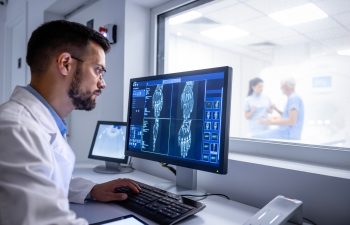
Healthcare is moving quickly into a digital-first era. Hospitals and clinics now rely on advanced software, connected devices, and intelligent systems to improve the delivery of care. Electronic health records, AI-powered tools, and robotic systems are becoming part of everyday medical workflows. These technologies help clinicians diagnose diseases earlier, monitor patients more accurately, and make faster treatment decisions.
The shift toward digital healthcare also changes how medical teams are trained. Modern operating rooms use sophisticated imaging systems, robotics, and real-time data platforms that require specialized technical knowledge. Surgical teams must understand how to operate and maintain these tools while still prioritizing patient safety. As technology continues to reshape healthcare, education programs are adapting so the next generation of medical professionals can work confidently in these high-tech clinical environments.
The Intersection of Human Skill and Digital Tools
Digital innovation does not replace healthcare professionals. Instead, it strengthens their ability to deliver safe, precise, and efficient care. Surgeons now rely on digital imaging systems, integrated operating room displays, and robotic tools to improve accuracy during procedures. These technologies support better visibility and control inside the operating room. At the same time, surgical technologists remain essential members of the team. They prepare equipment, maintain sterile environments, and make sure every digital system is set up and working properly before and during surgery.
As operating rooms become more advanced, training must evolve as well. Surgical teams need professionals who understand both traditional surgical practices and modern digital tools. This is why many surgical tech degree programs now include training in robotic surgical systems, digital sterile-field protocols, and other advanced operating room technologies. This updated curriculum prepares technologists to support complex procedures confidently. It also ensures they can manage modern equipment while maintaining the safety and efficiency that every surgical team depends on.
The Rise of AI-Driven Diagnostics
Artificial intelligence is transforming how clinicians identify and diagnose disease. Machine learning systems can analyze large volumes of medical images, lab results, and patient records within seconds. These tools often detect patterns that are difficult for humans to notice, which can lead to earlier diagnosis of conditions such as cancer, heart disease, and neurological disorders.
AI is also helping clinicians reduce administrative workload. Ambient clinical documentation systems automatically convert doctor-patient conversations into structured medical notes. As these technologies improve, AI will continue to support faster and more accurate diagnostic decisions.
Robotic-Assisted Surgery
Robotic surgical systems are becoming common in advanced operating rooms. These systems allow surgeons to control robotic arms that perform highly precise movements through very small incisions. The surgeon still directs every action, but the robotic platform enhances accuracy and stability during delicate procedures.
Patients often benefit from robotic-assisted surgery through shorter hospital stays and faster recovery times. Smaller incisions can reduce blood loss and lower the risk of infection. As hospitals adopt these systems more widely, surgical teams must learn how to coordinate their workflow with robotic technology to maintain efficiency and safety.
Virtual and Augmented Reality in Medical Training
Virtual reality and augmented reality are reshaping how medical professionals learn complex procedures. These technologies allow trainees to practice surgeries in immersive digital environments that replicate real operating room scenarios. Learners can repeat procedures multiple times without risk to patients.
Augmented reality also allows instructors to overlay digital information onto real-world surgical views. For example, a trainee might see anatomical guides or procedural steps projected during practice sessions. This approach strengthens both technical understanding and procedural confidence before entering a real clinical setting.
The Internet of Medical Things
The Internet of Medical Things connects healthcare devices through secure networks that continuously collect patient data. Wearable monitors can track heart rate, blood glucose, oxygen levels, and other health indicators throughout the day. These devices send information directly to healthcare providers.
Real-time monitoring allows clinicians to detect potential problems much earlier. A patient recovering from surgery, for example, can be monitored remotely without having to stay in the hospital. This approach improves patient comfort while still allowing healthcare teams to respond quickly if any concerning changes appear.
Telemedicine and Remote Collaboration
Telemedicine has expanded access to healthcare by allowing patients to consult doctors through secure digital platforms. People who live far from major medical centers can now receive expert advice without traveling long distances. Virtual consultations also help reduce wait times for many types of care.
Specialists can also collaborate remotely during complex cases. A surgeon in one hospital may consult with experts in another location during a procedure. These digital connections improve knowledge sharing and help ensure that patients receive the most informed treatment decisions possible.
Big Data and Predictive Analytics
Healthcare systems generate enormous amounts of data from electronic records, wearable devices, and diagnostic tools. When analyzed properly, this data can reveal patterns that help clinicians understand disease progression and treatment outcomes.
Predictive analytics uses this information to identify patients who may be at higher risk for certain conditions. For example, algorithms can flag early warning signs of heart disease or diabetes before symptoms become severe.
3D Printing and Personalized Medical Solutions
3D printing is helping healthcare providers create customized medical solutions for individual patients. Using data from CT scans and MRI images, specialists can produce detailed physical models of organs or bones before surgery. These models allow surgeons to examine complex structures in advance and plan procedures with greater accuracy.
The technology also supports the production of personalized prosthetics and implants. Custom designs improve comfort and function by matching the patient’s exact anatomy. Hospitals and research centers are also exploring bioprinting, which involves printing living cells to create tissue structures that may one day help address organ shortages.
The Future of Digital Healthcare
Digital innovation is reshaping nearly every part of modern healthcare. Artificial intelligence improves diagnostic accuracy, robotic systems enhance surgical precision, and connected devices provide continuous patient monitoring. Training methods are also evolving through immersive technologies such as virtual reality and data-driven simulations.
These advancements share a common purpose. Technology allows healthcare providers to deliver more precise, efficient, and personalized care. As digital tools continue to evolve, healthcare professionals will combine technical expertise with human judgment to create a system that supports both better outcomes and stronger patient relationships.
Posted on behalf of
9301 Wilshire Blvd Suite 405A
Beverly Hills, CA 90210
Phone:
(310) 299-8959
(877) 760-3570
Email: info@myconciergemd.com
Hours
Monday - Friday
9:00 am - 5:30 pm