
Advanced Liver Ultrasound in Los Angeles – Early Detection & Peace of Mind

Sometimes your body whispers before it ever shouts. Maybe it’s a heaviness after meals, unusual bloating, unexplained fatigue, or a feeling you can’t quite put your finger on. With liver-related issues, symptoms often stay vague until the condition becomes more serious.

A liver ultrasound (also known as a liver scan) is one of the most reliable, gentle, and non-invasive ways to understand what’s happening inside long before problems escalate. During the procedure, real-time images of your liver and surrounding structures are displayed on a computer screen for immediate analysis. At MyConciergeMD in Los Angeles, we offer this test to give you clarity, comfort, and answers rooted in real data, not guesswork.

What the liver does – and why it’s essential

Your liver is one of the hardest-working organs in your body. It:

  1. Filters toxins and chemicals
  2. Processes medications
  3. Helps digest fats
  4. Stores vitamins and essential nutrients
  5. Regulates metabolism and blood sugar
  6. Produces proteins that help your blood clot

The liver is a key part of the biliary system, which includes the gallbladder and bile ducts, and is responsible for producing and transporting bile to aid in digestion.

When the liver is strained or unhealthy, everything, from digestion to energy levels, can be affected. Because many liver diseases develop silently, early imaging with liver ultrasound is key to staying ahead of potential issues.

Why doctors recommend a liver ultrasound

Doctors may recommend a liver ultrasound if you experience or have:

  1. Abdominal pain or discomfort in the right upper quadrant
  2. Fatty liver disease (NAFLD) or alcohol related liver disease
  3. Elevated liver enzymes (ALT, AST, ALP)
  4. Hepatitis B or C
  5. Chronic hepatitis (such as hepatitis B or C)
  6. Jaundice or yellowing of the skin
  7. Unexplained bloating or fluid retention
  8. Liver cysts, nodules, or tumors
  9. History of alcohol use
  10. Gallbladder disease or biliary obstruction
  11. Unexplained weight loss or appetite changes

An upper right quadrant ultrasound focuses on the liver and nearby structures, and may also visualize other organs such as the gallbladder, pancreas, and right kidney.

It is also commonly performed as part of routine abdominal imaging or annual wellness assessments.

Preparation for the liver ultrasound

To get the most accurate images:

  1. Fast for 6–8 hours before your appointment. Fasting helps reduce gas and ensures the liver and gallbladder can be seen clearly, as intestinal gas can block the ultrasound beam and make it harder to obtain clear images.
  2. Avoid heavy meals the night before
  3. Take medications as usual unless told otherwise
  4. Drink water only if needed
  5. Avoid carbonated beverages and smoking before the scan (these introduce air in the abdomen)

Procedure of liver ultrasound at My Concierge MD
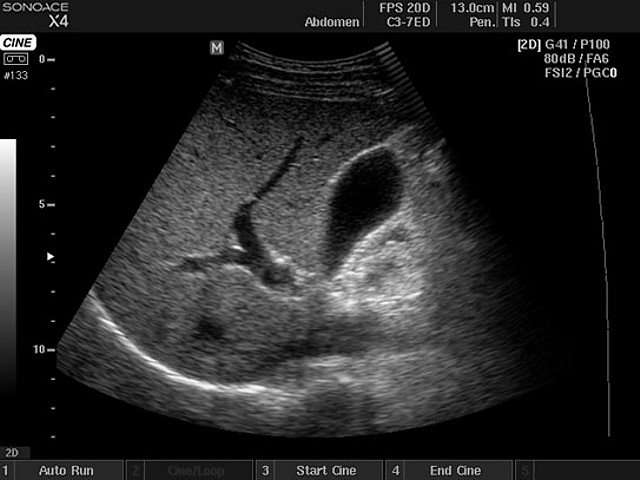
Ultrasound images - Liver and gallbladder, B-mode, echogramm №401

A liver ultrasound typically takes 15-25 minutes and is completely painless. Here’s what you can expect:

  1. You’ll lie on your back or slightly turn to the left.
  2. A warm gel is placed over your right upper abdomen by our ultrasound technician.
  3. The ultrasound technician performs an ultrasound of the liver, focusing on the upper right quadrant (quadrant ultrasound), and moves the ultrasound probe along your ribs and upper abdomen.
  4. Images of the liver, gallbladder, and nearby structures are captured.

After the scan, a detailed report (ultrasound report) is prepared by the radiologist, summarizing the findings for your doctor.

What Liver Ultrasound Scan Confirms?

  1. Liver size and texture
  2. Fatty infiltration (fatty liver)
  3. Echogenic liver (increased brightness indicating possible fatty liver, hepatitis, or cirrhosis)
  4. Cysts, tumors, or nodules
  5. Solid masses (distinguishing tumors from cysts or fluid collections)
  6. Inflammation or signs of chronic liver disease
  7. Dilated bile ducts (suggesting possible blockages or obstructions)
  8. Blockages in the bile ducts
  9. Gallstones or gallbladder disease
  10. Comparison to a normal liver appearance

Liver Cancer Detection with Ultrasound

Detecting liver cancer early can make all the difference in treatment and outcomes. Liver ultrasound uses high-frequency sound waves to create detailed images of the liver, making it an essential tool for identifying liver lesions, tumors, and other abnormalities. With the addition of Doppler ultrasound, doctors can assess blood flow within the liver and its major vessels, which helps distinguish between benign and malignant lesions. This vascular liver ultrasound approach is especially valuable for spotting signs of hepatocellular carcinoma (HCC), the most common type of primary liver cancer.

For individuals with chronic liver disease, cirrhosis, or a history of hepatitis B or C, regular liver ultrasound screening is recommended. This imaging test is non-invasive, does not involve radiation exposure, and can detect subtle changes in liver tissue before symptoms appear. By monitoring blood flow and liver structure, ultrasound can help catch liver cancer at an early, more treatable stage, providing peace of mind and a clear path forward for those at risk.

Fatty Liver Diagnosis and Assessment

Fatty liver disease, or hepatic steatosis, is increasingly common and often silent in its early stages. Liver ultrasound is a frontline imaging test for detecting and assessing fatty liver. During the scan, areas of increased echogenicity (brightness) signal the presence of fatty tissue within the liver. The degree of brightness can help estimate the severity of fatty liver disease, and advanced techniques like elastography ultrasound can measure liver stiffness—a key indicator of fibrosis or scarring.

Elastography ultrasound is particularly useful for monitoring the progression of fatty liver disease and evaluating the risk of developing more serious liver conditions. While a liver biopsy may still be needed for a definite diagnosis in some cases, ultrasound offers a safe, non-invasive, and cost-effective way to screen for and track fatty liver disease over time.

Semaglutide Weight Loss Special Promotion $999
3 Month Supply of Best Compounded Semaglutdie Injection ( Ozempic, Wegovy) 
Tirzepatide Weight Loss Special Promotion $850 
1 Month Supply of Best Compounded Tirzepatide Injection ( Mounjaro, Zepbound)  
Includes
  • Virtual or In Person Office Visit with MD & Nutritionist 
  • Lab Orders To Evaluate Health & Optimize Deficiencies 
  • Continuous Support & Care! Contact Us Anytime! 
  • Medications Can Be Shipped To Your Door 
  • Lose 10-20% of Body Weight Safely 
  • 15+ Years Experience 
David

Contrast Enhanced Ultrasound: Expanding Diagnostic Power

Contrast-enhanced ultrasound (CEUS) takes liver imaging to the next level. By injecting tiny gas bubbles into a vein, this technique enhances the way sound waves reflect off liver tissue, making it easier to visualize liver lesions and blood vessels in real time. CEUS is especially helpful for characterizing focal liver lesions, distinguishing between benign and malignant tumors, and assessing how well blood is flowing through the liver.

For patients with chronic liver disease or cirrhosis, where liver lesions are more likely to develop, CEUS provides a clearer, more detailed picture than standard ultrasound alone. It can also reduce the need for additional imaging tests like CT or MRI scans, streamlining the diagnostic process and helping your doctor make more informed decisions about your care.

Benefits of Liver Ultrasound

  1. Safe, painless, and radiation-free
  2. Clears up vague symptoms and provides early answers
  3. Helps detect serious liver conditions and signs of liver damage before they progress
  4. Useful for ongoing monitoring of chronic liver disease
  5. Ideal for evaluating fatty liver, hepatitis, and gallbladder issues
  6. Quick results and no recovery time

If abnormalities are found, other tests may be recommended to confirm the diagnosis and develop a personalized treatment plan.

Risks of Liver Ultrasound

There are essentially no risks. Liver ultrasound is considered one of the safest imaging techniques for people of all ages.

Doppler Liver Ultrasound (Hepatic Doppler Ultrasound) for Assessing Blood Flow

A Doppler liver ultrasound adds an important layer to the evaluation by assessing the blood flow within the liver. Duplex ultrasound combines standard ultrasound imaging with Doppler techniques to assess both the liver’s structure and the dynamics of blood flow through its blood vessels, providing detailed information about flow direction and speed. This test examines the major vascular structures, including:

  1. Portal vein – carries blood from the digestive tract into the liver
  2. Hepatic arteries – supply oxygenated blood
  3. Hepatic veins – drain blood from the liver back to the heart
  4. Inferior vena cava (IVC) – a major vein connected to liver circulation

Doppler imaging helps detect:

  1. Portal hypertension
  2. Liver cirrhosis complications
  3. Abnormal blood flow patterns
  4. Clots (portal vein thrombosis)
  5. Liver transplant vascular issues
  6. Tumor-related blood vessel changes

It is particularly helpful when evaluating unexplained swelling, chronic liver disease, or suspected vascular obstruction.

Cost and Accessibility of Liver Ultrasound in Los Angeles

Liver ultrasound is widely available throughout Los Angeles, with costs typically ranging from $200 to $1,000 depending on the provider, location, and whether advanced technologies like CEUS or elastography are used. Most insurance plans cover standard liver ultrasound scans, making this essential tool accessible to many patients. Specialized imaging centers and hospitals may offer advanced liver ultrasound options, so it’s important to discuss your needs with your healthcare provider.

For those without insurance, some clinics and imaging centers provide discounted rates or package deals, helping to make liver ultrasound more affordable. With numerous facilities offering this noninvasive test, patients in Los Angeles can access high-quality liver imaging and take proactive steps toward maintaining a healthy liver.

Why Choose MyConciergeMD for Your Liver Ultrasound?

Your liver works tirelessly to detoxify, metabolize nutrients, and support overall health. Evaluating its health is critical, and at MyConciergeMD, we combine advanced imaging technology with a compassionate, patient-first approach to ensure you feel informed and at ease.

Why patients across Los Angeles trust us for liver ultrasound:

  1. Expert clinicians with deep hepatology insight guide your care, interpreting liver structure, function, and vascular health with precision.
  2. State-of-the-art ultrasound and Doppler imaging capture detailed views of the liver tissue, bile ducts, and blood flow, allowing early detection of abnormalities like fatty liver, fibrosis (including assessment for scar tissue), or vascular issues. The evaluation also includes assessment for infectious diseases that may affect the liver.
  3. Personalized, patient-centered experience ensures you are comfortable, informed, and never rushed, making your visit smooth and reassuring.
  4. Integrated care with follow-up guidance: Should any irregularities be detected, our team coordinates next steps, including lifestyle recommendations, specialist referrals, or further testing.
  5. Convenient scheduling and minimal wait times, ideal for busy professionals, families, and travelers seeking top-tier liver health evaluation.
  6. Holistic approach to wellness, connecting liver assessment with your overall health, medications, nutrition, and preventive strategies.

Patients receive clear, comprehensive liver ultrasound results, ensuring you understand your findings and the next steps for your care.

At MyConciergeMD, your liver health is not just a test it’s a step toward long-term vitality, peace of mind, and proactive care from a team that truly cares.

Your liver does more for you than you realize – let’s make sure it’s healthy

Whether you’re managing ongoing symptoms, monitoring a chronic condition, or simply want reassurance, a liver ultrasound can offer clarity and peace of mind.

At MyConciergeMD, you’re cared for with empathy, expertise, and the latest diagnostic technology, right here in Los Angeles.

If something feels “off,” you don’t have to wait. Your health deserves answers today so book your appointment with us now.

FAQs

Is a liver ultrasound painful or uncomfortable?

Not at all. Liver ultrasound is entirely painless. You may feel slight pressure as the probe moves over your abdomen, especially near the ribs, but it’s generally very gentle. Since there’s no radiation or needles, it’s safe for all ages and frequently used for long-term monitoring.

Why do I need to fast before a liver ultrasound?

Fasting helps reduce gas in the abdomen, which can block ultrasound waves and make it harder to see the liver clearly. It also allows your gallbladder to remain full, improving visibility. Following the fasting instructions ensures the most accurate and reliable images.

Can a liver ultrasound detect fatty liver?

Yes. In fact, it’s one of the primary ways to diagnose fatty liver disease (NAFLD). The ultrasound shows changes in liver texture and brightness that indicate fat accumulation. It is non-invasive and ideal for monitoring progress over time, especially when lifestyle changes are being made.

How long does it take to get results?

Most patients receive their results quickly—often within the same day or within 24 hours. Because liver issues can progress silently, rapid reporting helps your doctor make timely decisions about treatment or further testing if needed.

What conditions can a Doppler liver ultrasound detect?

A Doppler liver ultrasound evaluates blood flow, making it valuable for diagnosing portal hypertension, vein blockages, liver cirrhosis complications, clots, and vascular abnormalities linked to tumors. It provides information that a regular ultrasound alone cannot, helping guide more precise treatment plans.

As Seen On

Your-Concierge-MD-Clients
